
Freeze-Dried vs Dehydrated Food :-
When building a long-term food supply, you will often come across two popular options: freeze-dried food and dehydrated food. Both methods remove moisture from food, helping make it easier to store for longer periods.
At first glance, they may seem almost identical. However, the two processes are different, and that can affect texture, preparation, storage, and how you choose to use the food.
So which one is better for long-term storage?
There is no universal answer. The better option depends on what you are storing, how you plan to use it, your available storage space, and your budget.
What Is Freeze-Dried Food?
Freeze drying is a process that removes moisture from frozen food under controlled conditions.
The food is first frozen and then placed under low-pressure conditions so that much of the frozen moisture is removed.
The result is a lightweight product that can be stored in suitable packaging and later prepared according to the manufacturer’s instructions.
Freeze-dried food is available in many forms, including meat, vegetables, fruits, ingredients, breakfast foods, and complete meals.
What Is Dehydrated Food?
Dehydration also removes moisture from food, but it generally uses controlled heat and airflow to reduce the moisture content.
The process is commonly used for fruits, vegetables, meats, and other foods.
Dehydrated food can also be lightweight and convenient for storage, camping, backpacking, and meal preparation.
The final texture is often different from freeze-dried food, which is one of the main differences you may notice.
Freeze-Dried vs Dehydrated Food
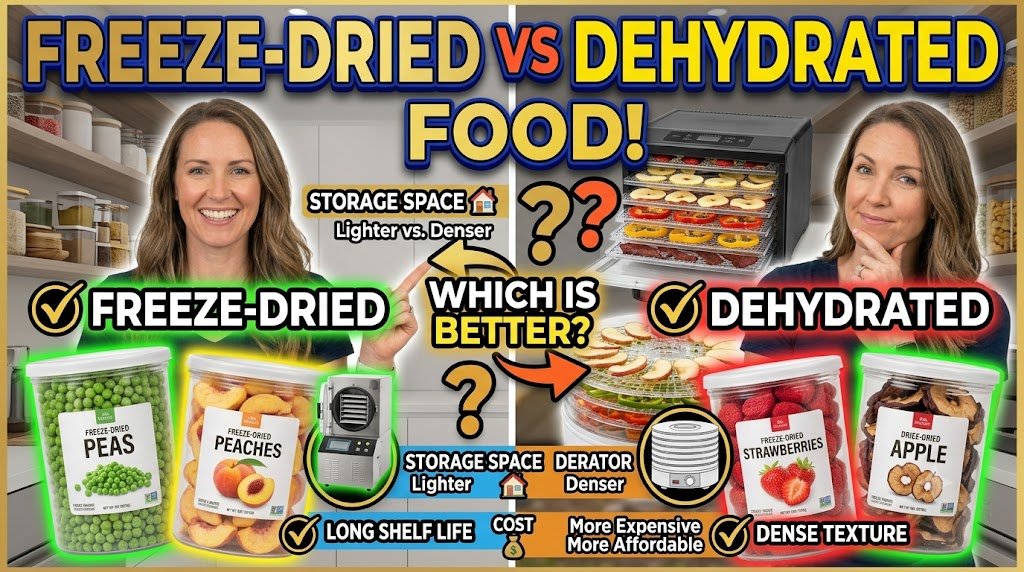
The biggest difference between the two methods is how moisture is removed.
With freeze-drying, food is frozen before the moisture is removed. With dehydration, heat and airflow are used to remove moisture.
This difference can affect the food’s texture and how it behaves when prepared.
Rather than choosing one method for everything, think about the types of food you want to store and how you expect to use them.
Which Has a Longer Shelf Life?
Shelf life is one of the biggest reasons people compare freeze-dried vs dehydrated food.
However, there is no single shelf-life number that applies to every product.
The actual storage life can depend on the type of food, packaging, moisture exposure, temperature, storage conditions, and the manufacturer’s recommendations.
Some commercially packaged freeze-dried foods are specifically sold for long-term storage, while dehydrated products can also have a long storage life when properly prepared and packaged.
Always check the specific product’s storage information instead of assuming one general number applies to every food.
Texture Can Be Different
Texture is another noticeable difference.
Freeze-dried foods often become very lightweight and porous because of the way moisture is removed. This can make them easier to break apart or rehydrate.
Dehydrated foods tend to have a denser and sometimes chewier texture.
Neither option is automatically better. It comes down to personal preference and the type of food you are storing.
If texture matters to you, try small quantities of both before purchasing a large supply.
How They Compare for Storage Space
Both options can be useful when storage space is limited.
Removing moisture reduces the weight and bulk of food, making either method convenient compared with storing many fresh foods.
The actual amount of space you save depends on the food and packaging.
When comparing products, look at the package size, net weight, and number of servings rather than judging storage efficiency by the container alone.
Which Is Better for Meat?
Both methods can be used for meat, but they produce different results.
Freeze-dried meat is commonly sold as an ingredient or as part of complete meals. It can be useful for food storage, camping, and backpacking.
Dehydrated meat is also available in several forms, although it may have a different texture and preparation method.
If you are building a food storage supply, compare the specific products rather than choosing based only on the processing method.
Which Is Better for Vegetables?
Vegetables can work well with either method.
You can find freeze-dried vegetables such as peas, corn, broccoli, potatoes, and mixed vegetables. Dehydrated vegetables are also widely used for soups, stews, camping meals, and pantry storage.
Freeze-dried vegetables are often lightweight and can be convenient when you want ingredients that are easy to prepare.
Dehydrated vegetables may be useful when you prefer a denser ingredient or want to make your own stored food products.
Freeze-Dried vs Dehydrated for Backpacking
For backpacking, weight is an important consideration.
Both freeze-dried and dehydrated foods can help reduce the amount of weight you carry compared with many fresh foods.
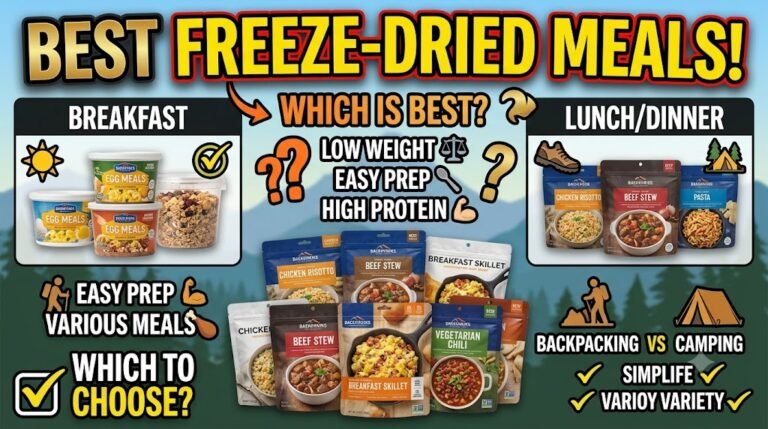
Freeze-dried meals for backpacking are particularly convenient because many are designed to be prepared with water.
Dehydrated ingredients can also work well for backpacking, especially if you prefer creating your own meals from individual ingredients.
Your choice may ultimately come down to convenience, taste, preparation, and price.
Preparation Differences
Before buying either type of food, check the preparation instructions.
Some freeze-dried meals are designed to be prepared simply by adding water and waiting for the recommended amount of time.
Dehydrated foods can also be rehydrated, but the amount of water and preparation time can vary depending on the food.
If you are buying food for camping or backpacking, simple preparation can be an important factor.
Cost Can Be Different
Price is another major consideration.
Freeze-dried food can be more expensive than some dehydrated alternatives because of the equipment and processing involved.
However, price varies considerably depending on the brand, food type, packaging, serving size, and whether you are buying individual packages or in bulk.
Instead of comparing the package price alone, compare the cost per serving and the amount of food included.
A cheaper package is not necessarily the better value if it contains fewer servings.
Which One Should You Choose?
The answer depends on your goals.
Choose freeze-dried food if you want convenient commercially packaged meals or ingredients, lightweight food for outdoor trips, and a wide range of long-term storage options.
Choose dehydrated food if you prefer a different texture, want to prepare or store your own ingredients, or find a dehydrated product that offers better value for your needs.
You can also use both.
There is no rule saying your entire food storage supply has to use one preservation method.
Can You Store Both?
Absolutely.
A combination of freeze-dried and dehydrated foods can give you more flexibility.
For example, you could keep freeze-dried meals and meats alongside dehydrated vegetables, fruits, or other ingredients.
This approach can also give you more choices when preparing meals.
The important thing is to understand the storage requirements for each product and follow the manufacturer’s recommendations.
What to Check Before Buying
Whether you choose freeze-dried or dehydrated food, compare a few basic details before purchasing.
Look at:
- Shelf-life information
- Package size
- Number of servings
- Cost per serving
- Ingredients
- Preparation instructions
- Packaging
- Storage recommendations
- Your available storage space
These details can help you choose food based on actual value rather than marketing claims.
Is Freeze-Dried or Dehydrated Food Better for Long-Term Storage?
Both can have a place in a well-planned food storage pantry.
Freeze-dried food can be especially attractive when you want commercially packaged meals and ingredients that are lightweight and convenient.
Dehydrated food can also be a useful option, particularly when you prefer its texture, preparation style, or price.
Instead of asking which method is always better, consider which one works better for the specific foods you want to store.
Conclusion
The choice between freeze-dried vs dehydrated food for long-term storage depends on your preferences, budget, storage space, and intended use.
Freeze-dried foods are popular for long-term storage, camping, and backpacking because they are lightweight and available in many convenient meal and ingredient options. Dehydrated foods can also provide a practical storage option and may work especially well for certain ingredients.
Before buying in bulk, try both types if possible. Compare serving sizes, cost, packaging, preparation, and storage recommendations to find the products that make the most sense for your pantry.