
Dried Fruit and Vegetables for Food Storage:-
When building a food storage pantry, it is easy to focus on complete meals and forget about individual ingredients. Freeze-dried fruit and vegetables can be useful because they give you more options when preparing meals, snacks, and simple recipes.
Unlike fresh produce, freeze-dried options are designed to be stored in suitable packaging without taking up the same type of refrigerator or freezer space. They are also lightweight, which makes them useful beyond the pantry for camping and backpacking.
But with so many options available, which fruits and vegetables are worth keeping in your food storage supply?
Why Store Freeze-Dried Fruit and Vegetables?
One of the biggest advantages is versatility.
You can use freeze-dried fruits and vegetables on their own, add them to recipes, or combine them with other shelf-stable ingredients.
Fruit can be useful for snacks, breakfast foods, and simple recipes. Vegetables can be added to soups, rice dishes, pasta, casseroles, and other meals.
Having both categories in your pantry also gives you more variety than storing only complete meals.
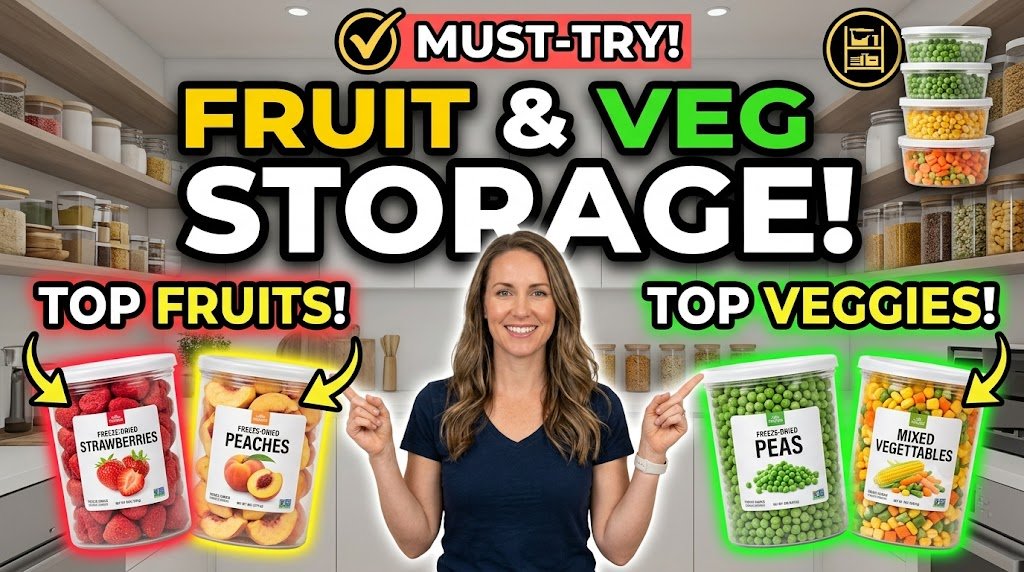
Best Freeze-Dried Fruits for Food Storage
There are many freeze-dried fruit options available, but some are particularly easy to use.
Freeze Dried Strawberries
Freeze-dried strawberries are a popular option because they can be used in several ways.
They can be eaten as a crunchy snack, added to breakfast foods, or used as an ingredient in different recipes.
If you are buying fruit for long-term storage, compare package sizes and storage recommendations before purchasing.
Freeze-Dried Peaches
Freeze-dried peaches can add another flavor to your fruit supply.
They can be eaten directly from the package or prepared according to the product instructions. They can also be combined with other freeze-dried fruits for more variety.
If you are building a larger pantry, having several different fruits can be more useful than buying a large quantity of just one type.
Freeze-Dried Fruit Chips
Freeze-dried fruit chips are another convenient option.
They are lightweight and easy to portion, making them suitable for both home storage and outdoor trips.
Because different products can vary in ingredients and preparation, check the label before buying.
Best Freeze-Dried Vegetables for Food Storage
Vegetables can be even more useful when building a pantry because they can be incorporated into many everyday meals.
Freeze Dried Peas
Freeze-dried peas are simple to use and can work well in soups, rice dishes, pasta, casseroles, and mixed vegetable recipes.
They are also easy to combine with other freeze-dried vegetables when you want more variety.
Freeze-Dried Broccoli
Freeze-dried broccoli can be added to soups, pasta dishes, casseroles, and other recipes.
Before purchasing, look at the size of the pieces and the package information. Different products may have different cuts and serving sizes.
Freeze-Dried Potatoes
Freeze-dried potatoes are another useful pantry ingredient.
They can be used in soups, stews, casseroles, and other meals. Their versatility makes them worth considering if potatoes are already part of your normal cooking.
Freeze-Dried Mixed Vegetables
If you prefer convenience, a freeze-dried veggie mix can be a good option.
Mixed vegetable products may include combinations of peas, corn, carrots, green beans, or other vegetables.
The exact ingredients vary by product, so check the package before purchasing.
A mixed vegetable product can save you from buying several individual packages and can make it easier to add vegetables to different meals.
Freeze-Dried Fruits and Vegetables for Long-Term Storage
If your main goal is building a long-term food supply, packaging should be one of the first things you consider.
Look for products specifically packaged for storage and follow the manufacturer’s recommendations.
Keep unopened products in a cool, dry location away from excessive heat, moisture, and direct sunlight.
Remember that storage recommendations can vary between products. The shelf life printed or advertised by one manufacturer should not automatically be applied to another product.
Compare Serving Sizes Before Buying
Package size can be misleading.
One container may look much larger than another but contain a different number of servings. When comparing freeze-dried fruit and vegetables, look at the serving size, package weight, and total servings.
Price per serving can be especially useful when comparing different brands.
This gives you a better idea of what you are actually getting for your money.
Buy the Fruits and Vegetables You Will Actually Use
A food storage pantry does not need every available variety.
Think about what you already eat at home.
If you regularly use peas, broccoli, potatoes, or mixed vegetables, those products are likely to become useful additions to your pantry.
The same applies to fruit. If your household already enjoys strawberries or peaches, those options may be more practical than buying an unusual fruit simply because it is available.
Food you will actually use is usually a better purchase than food that sits untouched.
Consider Buying in Bulk
Buying freeze-dried fruit in bulk or vegetables in larger quantities can make sense when you already know which products you prefer.
Bulk buying can be useful for families or people building a larger food storage supply.
However, test smaller packages first when possible. This gives you an opportunity to check the taste, texture, package size, and preparation method before spending more money.
Freeze-Dried Fruit and Vegetables for Camping
These foods are not limited to home food storage.
Because freeze-dried produce is lightweight, it can also be useful for camping and backpacking.
Fruit can work as a simple snack, while vegetables can be added to camping meals. If you already have freeze-dried produce stored at home, you can use some of it for outdoor trips rather than buying completely separate foods.
How to Organize Your Produce Storage
Once you start buying different fruits and vegetables, organization becomes important.
Keep similar products together and label packages when necessary. You can create separate areas for fruit, vegetables, complete meals, meat, and other ingredients.
Keep track of purchase dates so you know what is already in your pantry.
An organized storage system makes it easier to find what you need and reduces the chance of buying duplicate products.
Should You Buy Fruit and Vegetables Separately?
It depends on how you plan to use them.
Buying individual fruits and vegetables gives you more control over your selection. You can choose exactly which ingredients you want and adjust the quantities based on your household’s preferences.
Mixed products can be more convenient when you want several ingredients in one package.
There is no need to choose only one approach. A combination of individual vegetables, mixed vegetables, and different fruits can give you a more flexible food supply.
What to Look for When Buying Freeze-Dried Produce
Before purchasing, compare these details:
- Ingredients
- Serving size
- Number of servings
- Package size
- Packaging type
- Storage recommendations
- Price
- Preparation instructions
Also consider whether you are buying the food for everyday pantry use, long-term storage, camping, or a combination of these purposes.
Your intended use can help determine which package size and product type makes the most sense.
Are Freeze-Dried Fruits and Vegetables Worth Storing?
For many food storage setups, they can be a useful addition.
They provide ingredients that can be used in different meals rather than locking you into a particular prepared recipe.
Freeze-dried fruit can add variety to snacks and breakfast foods, while freeze-dried vegetables can be incorporated into soups, pasta, rice dishes, and casseroles.
The key is choosing products that fit your normal eating habits and storing them according to the manufacturer’s recommendations.
Conclusion
The best freeze-dried fruit and vegetables for food storage are the ones that give you flexibility and fit the way you normally eat.
For vegetables, consider options such as peas, broccoli, potatoes, and mixed vegetables. For fruit, strawberries, peaches, and fruit chips can provide different choices for snacks and meals.
Compare serving sizes, packaging, ingredients, and prices before buying, and consider testing smaller packages before purchasing in bulk.
With a good mix of fruits and vegetables, you can make your food storage pantry more varied, practical, and easier to use.