
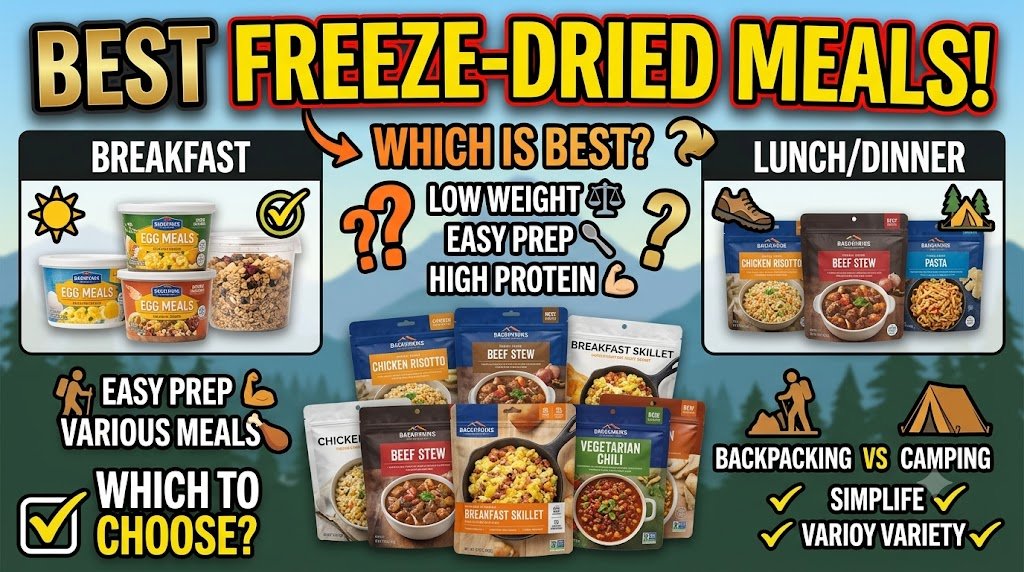
Best Freeze-Dried Meals-
When you are packing food for a backpacking or camping trip, every item has to earn its place in your bag. Heavy ingredients take up valuable space, complicated meals require more equipment, and nobody wants to spend half the evening cooking at the campsite.
That is one reason freeze-dried meals for backpacking have become a popular option. They are lightweight, easy to pack, and available in many different meal varieties.
But the best freeze-dried meal is not necessarily the one with the biggest serving or the longest ingredient list. The right choice depends on the length of your trip, the equipment you have, and the types of meals you actually enjoy.
Why Choose Freeze-Dried Meals for Backpacking?
Weight is one of the biggest considerations when planning a backpacking trip.
Fresh foods and bulky ingredients can quickly make a pack heavier. Freeze-dried meals offer a convenient alternative because much of the moisture has been removed before packaging.
They are also simple to carry and store in a backpack. Many products are designed around easy preparation, which can be useful when you are camping far from a kitchen.
For short trips, they can also reduce the amount of cooking equipment you need to bring.
Best Types of Freeze-Dried Meals for Camping
There is no single meal that works for every camper. A good camping food supply usually includes several different options.
Freeze-Dried Breakfast Meals
Breakfast is an important part of any camping plan, and freeze-dried breakfast meals can make the morning easier.
Egg-based meals, breakfast combinations, and other ready-to-prepare options can work well when you want something simple before starting a hike.
Choose meals that match your normal preferences. If you do not enjoy a particular breakfast at home, you probably will not suddenly love it at a campsite.
Freeze-Dried Chicken Meals
Chicken-based meals are another option worth considering.
They can be found in different combinations with rice, pasta, vegetables, or sauces. The variety makes chicken meals useful when you want something different from the typical camping meal.
Check the preparation instructions before your trip so you know exactly what equipment and amount of water you will need.
Freeze-Dried Beef Meals
Freeze-dried beef can work well in hearty camping meals.
Beef-based options may be combined with pasta, rice, vegetables, or other ingredients. If you prefer stronger flavors, these meals can provide some variety during a multi-day trip.
As with any freeze-dried meal, check the serving size before deciding how many packages to pack.
Look for Easy Preparation
One of the biggest advantages of camping meals is convenience.
When you are outdoors, you may not have access to a full kitchen, multiple cooking pots, or plenty of clean-up water. A meal with a simple preparation process can therefore be much easier to manage.
Before leaving home, read the instructions for each meal.
Check:
- How much water is required
- Whether hot water is needed
- How long the meal needs to sit
- Whether additional cooking is required
- How many servings are included
Knowing this in advance can prevent surprises at the campsite.
Consider the Weight of Your Food
For backpacking, weight matters more than it does for car camping.
If you are carrying everything on your back for several miles, choosing lightweight freeze-dried meals can make your packing easier.
Do not look only at the weight of the package, though. Consider the number of servings and how much food you need for the entire trip.
A meal that weighs slightly more but provides a useful portion may be a better choice than a very light package that leaves you wanting another meal.
Check the Serving Size
Serving sizes can vary considerably between products.
A package marketed as a meal may contain one serving, multiple servings, or a serving size that may not match how much you normally eat.
Before packing, look at the serving information and decide how many meals you will actually need.
For longer backpacking trips, it can be helpful to plan each day’s meals before you leave rather than simply throwing random packages into your backpack.
Choose a Variety of Meals
Eating the same meal every day can get boring quickly.
If you are going on a multi-day camping or backpacking trip, consider bringing several different flavors and meal types.
For example, you could pack:
- A freeze-dried breakfast
- A chicken-based meal
- A beef-based meal
- A pasta meal
- A rice-based meal
- A vegetable-based option
This gives you more choices without adding complicated ingredients to your pack.
Vegetarian Freeze Dried Meals
You do not need meat in every camping meal.
Vegetarian freeze-dried meals can provide another option for backpackers who prefer meat-free meals or want more variety.
Look at the ingredients and serving information before buying. If you are purchasing several meals for a longer trip, having a few different meal styles can make your food supply more interesting.
Gluten-Free and Dairy-Free Options
If you avoid certain ingredients, check the product label carefully before packing.
There are gluten-free freeze-dried meals and dairy-free freeze-dried meals available, but ingredients can vary between products.
Do not rely only on the name of a meal. Read the current ingredient and allergen information provided by the manufacturer before purchasing.
How Much Food Should You Pack?
The amount of food you need depends on your trip.
A short overnight camping trip obviously requires fewer meals than a week-long backpacking trip.
Create a simple meal plan before you leave. Count breakfast, lunch, dinner, and any additional food you expect to need.
It is also worth considering that your plans can change. Weather, delays, or a longer hiking route can affect how much food you use, so plan your supply accordingly.
Freeze-Dried Meals for Backpacking vs Camping
Backpacking and camping have different priorities.
When backpacking, weight and pack space are usually major concerns. Lightweight meals with simple preparation can be especially useful.
When car camping, weight is less important because you are not carrying everything on your back. You can therefore bring a wider selection of ingredients and cooking equipment.
This means the best freeze-dried meal for a backpacking trip may not necessarily be the best choice for a weekend at a campground.
Test Your Meals Before the Trip
One of the smartest things you can do is try your meals at home first.
Do not wait until you are several miles into a trail to discover that you dislike the flavor or that the preparation process is inconvenient.
Test a few freeze-dried meals before your trip. Pay attention to the taste, texture, portion size, and preparation time.
This also gives you an opportunity to figure out how much water you actually need and which cooking method works best with your equipment.
How to Pack Freeze-Dried Meals
Keep your meals organized so they are easy to find.
You can group breakfast meals and separate them from dinners. For longer trips, you can also organize food by day.
Protect packages from unnecessary damage while packing your backpack. If you are carrying several meals, arrange them so frequently needed items are easy to reach.
A simple packing system can save time when you are tired and ready to eat at the end of a long day.
Are Freeze-Dried Meals Worth It for Camping?
For many campers and backpackers, they can be.
The biggest advantages are convenience, portability, variety, and simple preparation. They can reduce the amount of cooking equipment you need and make meal planning easier.
However, they are not the only option. Some campers prefer to prepare their own meals using individual ingredients, while others enjoy cooking fresh food at a campsite.
The right choice depends on your trip, preferences, equipment, and budget.
Conclusion
The best freeze-dried meals for backpacking and camping are the ones that fit your trip and are easy for you to prepare and enjoy.
Look for meals with practical serving sizes, simple preparation, manageable weight, and flavors you already know you like. Consider adding different options such as freeze-dried breakfast meals, chicken, beef, vegetarian meals, and vegetable-based dishes for variety.
Most importantly, try your meals before heading out. A little preparation at home can make your camping food much easier to manage when you are actually on the trail or at the campsite.