
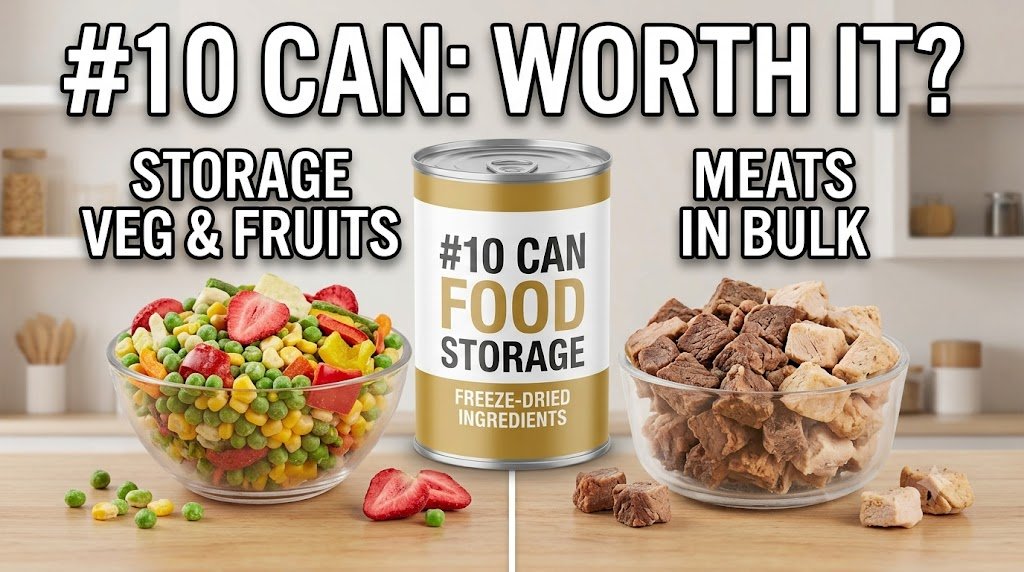
Freeze-Dried Foods in #10 Cans:
If you are building a long-term food storage pantry, you have probably seen freeze-dried foods in #10 cans. These large cans are commonly used for storing freeze-dried meals, meats, fruits, vegetables, and other shelf-stable foods.
But are they actually worth buying?
The answer depends on how you plan to use the food, how much storage space you have, and whether buying larger quantities makes sense for your household.
Here is what to consider before filling your pantry with #10 cans.
What Are #10 Cans?
A #10 can is a large food storage container commonly used for shelf-stable foods. They are much larger than the small cans typically found in a grocery store.
For freeze-dried food storage, #10 cans can be useful because they provide a sturdy container for larger quantities of food.
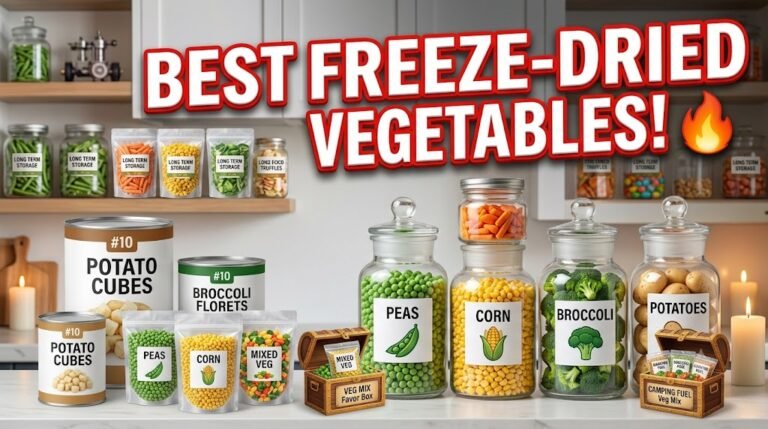
You can find many different products in this type of packaging, including freeze-dried meat, vegetables, fruits, and complete meals.
The exact amount of food inside depends on the product, so always check the package details rather than assuming every #10 can contains the same quantity.
Why Do People Buy Freeze-Dried Food in #10 Cans?
One of the biggest reasons is convenience.
If you are trying to build a larger food supply, buying individual small packages can take up more time and may not be the most convenient way to organize your pantry.
A #10 can gives you a larger quantity in one container. It can also be easier to stack and organize than a collection of small packages.
For people who already know which freeze-dried foods they like, buying #10 cans can be a practical option.
#10 Cans Can Be Useful for Long-Term Storage
Packaging is an important part of food storage.
A properly sealed container can help protect the food from outside conditions. However, the actual storage life depends on the specific product, packaging, storage environment, and manufacturer’s recommendations.
If you purchase freeze-dried #10 cans, store them in a suitable location and keep the cans protected from excessive heat, moisture, and direct sunlight.
Always follow the storage instructions provided by the manufacturer.
What Can You Buy in #10 Cans?
There are many different types of freeze-dried foods available in larger cans.
Some common options include:
- Freeze-dried vegetables
- Freeze-dried fruits
- Freeze-dried beef
- Freeze-dried chicken
- Freeze-dried meals
- Breakfast foods
- Soups and meal combinations
- Freeze-dried ingredients
This variety is one of the advantages of using #10 cans. You are not limited to complete meals. You can also buy individual ingredients and combine them with other foods.
The Biggest Advantage Is Convenience
One reason #10 cans can be attractive is that they can simplify food storage.
Instead of keeping several small packages of the same ingredient, you can have a larger quantity stored in one container.
For example, if you regularly use freeze-dried vegetables in soups and other meals, a larger can may be more convenient than repeatedly purchasing small packages.
The same applies to freeze-dried meat or other ingredients you already know your household uses.
The Main Disadvantage Is the Size
The biggest downside is also one of the most obvious.
#10 cans are large.
If you have limited pantry space, several large cans can quickly take up room. Before buying in bulk, measure your available storage area and consider how many cans you can realistically keep organized.
Another issue is that a large container may not be ideal if you are the only person using it or if you rarely eat that particular food.
In that situation, smaller packages may be more practical.
What Happens After You Open a #10 Can?
This is an important point to consider before buying.
An unopened product can have a manufacturer’s stated shelf life under specified storage conditions. Once the container is opened, the remaining food is exposed to air and potentially moisture.
Because of this, you should follow the manufacturer’s instructions for handling and storing the product after opening.
If you expect to use only a small amount at a time, think about whether a large can is actually the right package size for you.
Compare Cost Per Serving
A common mistake is looking only at the price of the can.
Instead, compare the cost per serving with similar products.
For example, one #10 can might look more expensive than several smaller packages, but it could contain more servings. On the other hand, a cheaper-looking can might contain fewer servings than expected.
Check:
- Total servings
- Serving size
- Net weight
- Ingredients
- Price
- Packaging
- Storage recommendations
This gives you a much better idea of the actual value.
Are #10 Cans Better Than Smaller Packages?
Not necessarily.
The better option depends on how you use your food storage.
#10 cans can be a good choice if you have enough storage space and regularly use the food inside. They can also make sense when you are building a larger pantry and already know which products you prefer.
Smaller packages may be better if you are trying a product for the first time or if you want more variety without committing to a large quantity.
A simple strategy is to buy smaller packages first, test the food, and then consider larger cans of the products you actually enjoy.
How to Store #10 Cans
Choose a cool, dry storage location away from direct sunlight and excessive heat.
Keep cans clean and dry, and avoid damaging the containers. Organize them so you can easily see what you have stored.
It can also help to keep track of purchase dates. If you regularly add new cans to your pantry, placing older products where they will be used first can make your storage system easier to manage.
Always follow the manufacturer’s specific storage instructions because recommendations can vary between products.
Who Should Buy Freeze-Dried Foods in #10 Cans?
#10 cans can be a good fit for several types of buyers.
They may work well for people building a long-term food storage supply, families that regularly use freeze-dried ingredients, outdoor enthusiasts, or anyone who already knows which products they want to keep on hand.
They may be less convenient for people with limited storage space or those who want to try many different foods in smaller quantities.
So, Are Freeze-Dried Foods in #10 Cans Worth Buying?
They can be.
The value comes down to the specific product and how you plan to use it. A #10 can is not automatically a better deal simply because it contains more food.
Look at cost per serving, package size, ingredients, storage space, and how quickly you expect to use the food.
If you already know you like a particular freeze-dried meal, vegetable, or meat, buying it in a larger can may make sense. If you are unsure, start with a smaller package first.
Conclusion
So, are freeze-dried foods in #10 cans worth buying? For many food storage shoppers, they can be a practical option, especially when buying foods they already use regularly.
The main advantages are larger quantities, convenient storage, and a wide selection of freeze-dried foods available in this format. The main drawbacks are the larger size and the need to use the contents appropriately after opening.
Before buying, compare serving sizes, prices, ingredients, packaging, and storage recommendations. Most importantly, choose foods your household will actually use.