

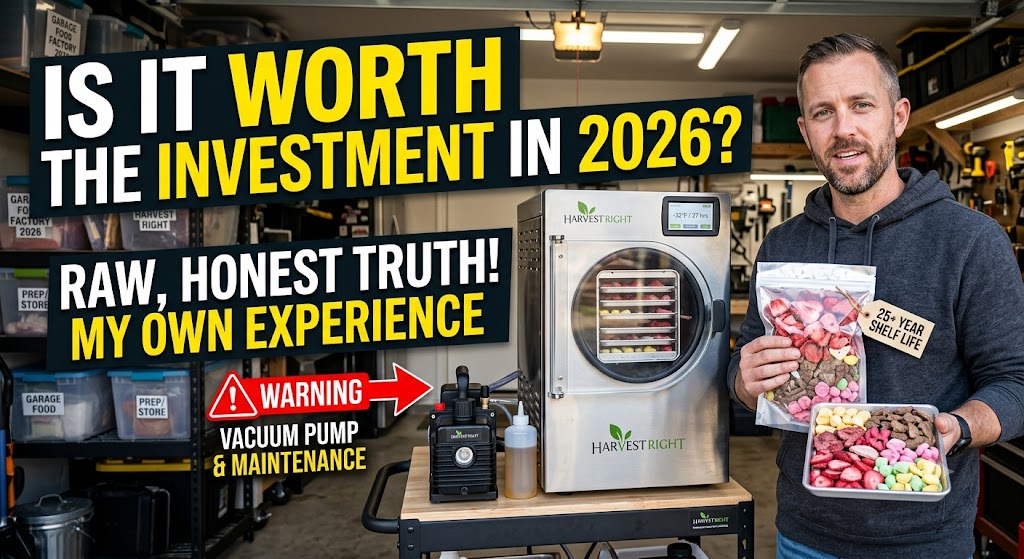
Harvest Right Freeze Dry Machine: Is It Worth the Investment in 2026?
I remember when I first started looking at the Harvest Right freeze dry machines online a couple of years ago. I kept adding it to my shopping cart and then closing the browser tab.
My inner voice kept screaming: Are you completely crazy? That costs as much as a decent used car.
You try to justify it. You tell yourself you’re gonna use it to save money on groceries.
But let’s be totally real for a second. It is a huge chunk of cash upfront.
Fast forward to 2026, and I’ve now been running my own Harvest Right machine heavily for a long time. My garage has basically turned into a mini space-food factory.
I’ve frozen everything from leftover chili and raw eggs to bags of candy and seasonal fruits. Some batches were legendary successes. Others were complete, epic disasters.
So, now that the dust has settled and the new 2026 model updates are out, is this machine actually worth your hard-earned money? Or is it just a giant, expensive garage ornament?
Let’s look at the raw, honest truth about what it’s really like to own one of these beasts.
Read also :
Freeze Drying for Preppers: Building a 1-Year Food Supply at Home
The Cold Hard Reality of How It Actually Works
The Pure Magic Phase
Alright, so before we talk about money, you gotta know what you are actually getting yourself into. This isn’t a simple food dehydrator that just blows hot air over apple slices.
A Harvest Right machine is a serious piece of industrial engineering. It drops the chamber temperature down to a freezing -40°F.
Once your food is frozen completely solid, a massive, heavy vacuum pump turns on. It sucks all the air out of the drum.
The Vanishing Moisture Trick
Then, the machine slowly warms up the metal trays just a tiny bit. Because of the intense vacuum pressure, the ice crystals inside the food turn straight into gas vapor without melting back into liquid.
This process pulls out 99% of the water weight. Because the food is never cooked or baked, it keeps its original shape, bright color, and over 97% of its original nutrients.
When you take a bite, you get an insane, airy crunch that completely shatters in your mouth. It’s awesome.
The 2026 Model Breakdown: Which Size Fits Your Garage?
Harvest Right has made some solid design tweaks over the last couple of years. They run quieter now, and the software handles tricky dairy or candy cycles way better than the old models did.
Here is exactly how the current sizes stack up if you’re trying to figure out which one to buy:
| Machine Size | Batch Capacity | Average Run Time | Power Requirements | Best Use Case | The True Reality |
| Small Model | About 6 to 9 lbs | 24 to 30 hours | Standard 110V wall outlet | Singles or small apartments | Fills up way too fast. |
| Medium Model | About 10 to 15 lbs | 26 to 32 hours | Standard 110V wall outlet | The Sweet Spot for families | Best overall value for hobbies. |
| Large Model | About 18 to 26 lbs | 28 to 36 hours | Dedicated 110V 20-Amp circuit | Homesteaders and large stashes | It is an absolute unit. Heavy. |
| Commercial | 30+ lbs | 36+ hours | Requires 220V power line | Small businesses and farms | Total overkill for normal folks. |
If you are stuck between sizes, trust me and buy the Medium. The Small is just too tiny.
By the time you slice up a few pounds of fruit, your trays are totally packed.
The Large is amazing, but it requires a special 20-amp breaker in your electrical panel. If you don’t have that, you gotta hire an electrician, which jacks up your startup costs big time.
Infrared Laser Thermometer
The 5-Gallon Vacuum Rupture: My Most Costly Mistake
Look, I gotta tell you a quick story about a massive blunder I made so you don’t ruin a whole week of work and wreck your expensive equipment.
When I first got my machine, I thought I could cut corners on the maintenance. Harvest Right pumps require a lot of oil changes unless you buy the super expensive oil-free pump option.
I had just run a massive, 12-lb batch of wet chili and a couple of trays of sliced pineapples back-to-back.
The oil in my pump had turned a cloudy, milky white color. That means it was full of trapped water vapor from the food.
I was lazy and decided to push it for one more run.
The Day the Pump Died
-
The Mistake: I ran a heavy cycle with wet, watery food using completely contaminated, old pump oil.
-
The Reaction: About 18 hours into the cycle, the pump got way too hot. It couldn’t pull a deep enough vacuum inside the chamber.
-
The Disaster: Because the vacuum failed, the frozen chili melted right on the trays. A giant wave of warm, greasy meat sludge flooded off the metal shelves and sucked straight down into the vacuum line.
The greasy gunk got into the inner valves of my $700 vacuum pump. It completely seized the motor.
It took me over 6 hours of taking the machine apart and flushing the line with hot water just to clean up the mess. The pump was completely dead. I had to buy a brand new one. Total waste of seven hundred bucks and a whole week of processing time.
The Golden Maintenance Rule
Learn from my pain. Never skimp on your pump maintenance.
If you use a standard oil pump, check the fluid glass after every single run. If it looks cloudy at all, drain it immediately.
It takes less than 3 minutes to do a quick oil change, and it saves you from destroying a very expensive machine.
The Real Pros and Cons: No Corporate Fluff
Let’s look at the actual good and bad things about owning one of these machines in 2026.
The Good Stuff
-
Zero Food Waste: This is the biggest selling point. If you see fruit going bad on your counter, or you have leftover pot roast, you just freeze dry it. It stops you from throwing cash into the trash bin.
-
The Candy Hack: You can make a massive side income freeze drying candy like Skittles or marshmallows. They expand to double their size and get mega-crunchy. People buy them at local markets for crazy high prices.
-
Elite Storage: Stored inside heavy 7-mil Mylar bags with a small oxygen absorber, your food stays perfect for 15 to 25 years on a shelf.
The Annoying Stuff
-
The Noise: These machines have a loud compressor and a vacuum pump that hums constantly. Do not put this in your kitchen. It belongs in a garage, basement, or utility room.
-
Long Cycle Times: A single batch takes anywhere from 24 to 36 hours to finish. It is a slow, steady waiting game.
-
The Power Bill: Running a high-powered freezer and vacuum pump for a day and a half straight will bump your monthly electricity bill up by about $30 to $45 if you run it constantly.
Step-by-Step: How to Gauge If It’s Worth It For You
If you are on the fence, follow this quick mental checklist to see if the investment makes sense for your lifestyle.
-
Look at Your Food Waste: Track how much food your family throws away each week. If you routinely toss out old leftovers, wilted vegetables, or moldy berries, the machine will pay for itself over time.
-
Check Your Space: Make sure you have a cool, dry place to put it. The machine needs plenty of breathing room. It struggles to run if your garage gets hotter than 85°F in the summer.
-
Evaluate Your Prep Goals: If you’re a hiker, camper, or survival prepper, it’s a no-brainer. Making your own ultra-light trail meals is ten times cheaper than buying those commercial mountain house pouches at the store.
Frequently Asked Questions
How long does a Harvest Right machine last?
If you change the pump oil regularly and keep the chamber clean, these units are total tanks. They can easily last for a decade or more. Most of the parts like the door gasket or vacuum lines are super easy to swap out yourself if they wear down.
Can you freeze dry anything?
Almost! It works awesome for fruits, meats, dairy, and full meals. The only things you absolutely cannot freeze dry are foods with super high fat or oil content. Stuff like pure peanut butter, butter, or chocolate will not dry out because oil doesn’t freeze into an ice crystal under a vacuum.
Is it hard to clean?
No, it’s actually pretty simple. Once a batch finishes, let the ice melt out of the drum through the drain valve. Wipe the inside down with a clean towel and a splash of white vinegar to keep it smelling fresh.
The Final Verdict: Is It Worth It in 2026?
At the end of the day, if you are just looking for a cool kitchen gadget to play with once a month, do not buy a Harvest Right machine. It is way too expensive for that.
But if you are serious about food preservation, homesteading, stopping food waste, or building a high-quality survival pantry, it is absolutely worth every single penny.
The technology in 2026 is better than it has ever been. The machines are smarter, more reliable, and save you thousands of dollars on long-term grocery stashes over the years.
I’m loading up my medium machine right now with a massive batch of sliced bananas and leftover chicken soup for the weekend.
Trust me on this one. Change your pump oil, pick the right size for your space, and pull the trigger. Your pantry game is never gonna be the same.