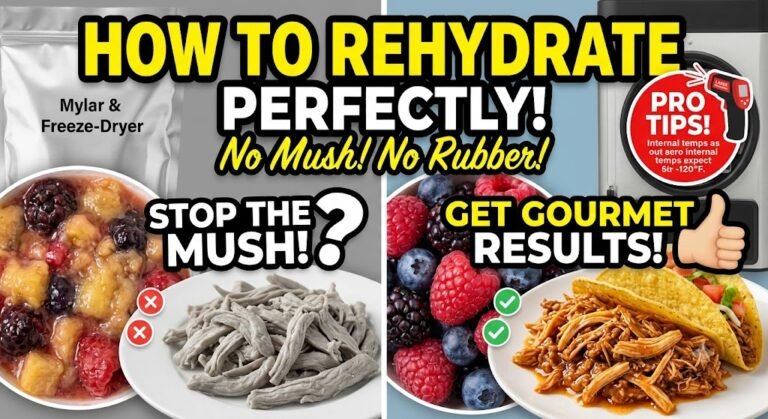

What foods should not be freeze-dried? The following are ten foods that should be avoided.
One of the most effective methods for preserving food at home is freeze-drying. When packaged correctly, it can transform fruits, vegetables, prepared meals, and numerous other foods into lightweight products that are convenient to store for months or even years.
Yet, this does not necessarily imply that each food item is appropriate for a freeze dryer.
Certain goods are not suitable for freeze-drying. Others may generate an unpleasant texture, induce a disturbance within the machine, or prove challenging to rehydrate. Additionally, certain foods necessitate additional precautions due to the fact that freeze-drying does not necessarily render unsafe food safe for consumption.
If you are new to freeze-drying, it is important to be aware of what to exclude in order to save time, money, and a significant amount of cleaning.
The following are ten foods that should be approached with extra caution or avoided when freeze-drying.
1. Foods Containing an Extremely High Fat Content
When it comes to freeze-drying, fat is one of the most significant obstacles.
In comparison to fruits or vegetables, foods such as butter, pure oils, fatty sauces, and very high-fat proteins contain a minimal amount of water. Foods with minimal moisture do not benefit from the freeze-drying process, as it operates by extracting water from frozen food.
If not stored correctly, high-fat foods may also develop rancidity over time.
This does not imply that all foods containing oil are unsuitable. For instance, certain cooked meals that contain moderate amounts of fat can be successfully freeze-dried. The challenge lies in the attempt to freeze-dry an object that is nearly exclusively composed of fat.
It is generally preferable to contemplate alternative storage methods when a food is oily or greasy.
2. Unadulterated Cooking Oils
Olive oil, vegetable oil, coconut oil, and similar products are not suitable for freeze-drying.
The freeze-drying procedure is unable to remove the necessary amount of water. The oil remains oil, rather than transforming into a dry, shelf-stable product such as a strawberry or prepared meal.
If you are preparing meals for long-term storage, you can freeze-dry the low-fat ingredients of a meal and add oil later during the preparation process.
This method is typically considerably more practical.
3. Honey and Other Highly Sugary Liquids
Honey has a high concentration of sugar and contains a minimal amount of water in comparison to many other substances.
Handling and cleaning issues may arise when sticky, syrupy foods are placed in a freeze dryer. The behavior of foods with a more balanced combination of water and solids may differ from that of foods that are extremely saccharine during the process.
This is one of the reasons why many individuals opt to store honey in its original form rather than attempting to freeze-dry it.
Thick syrups and similar concentrated liquids are subject to the same general caution.
4. Foods with a Lack of Structure and a High Level of Moisture
Certain foods are predominantly liquid and may be challenging to digest unless they are prepared appropriately.
They must be spread appropriately on trays, but thin soups and specific liquid foods can be freeze-dried. The risk of spills may be increased, and the processing time may be significantly extended if a substantial quantity of liquid is introduced into the machine without adequate preparation.
The problem is not that liquid goods cannot be freeze-dried. In reality, soups, stews, and sauces can be highly effective when executed correctly.
It is crucial to refrain from treating a deep tray of liquid as if it were a tray of sliced fruit.
Use modest portions and adhere to the specifications of your specific freeze dryer when preparing liquid meals.
5. Foods Containing an Extremely High Alcohol Content
Alcohol presents an alternative obstacle.
The primary objective of freeze-drying is to eliminate water from frozen food. The physical properties of alcohol are distinct, and products that contain substantial quantities of alcohol may not exhibit the anticipated behavior during the process.
Consequently, high-alcohol beverages and foods that are significantly reliant on alcohol are not suitable for home freeze-drying.
Before incorporating a recipe that contains alcohol into your machine, it is important to evaluate the actual quantity and consult the manufacturer’s instructions.
6. Raw Eggs in Their Shells
Although eggs can be freeze-dried, it is not advisable to place whole raw eggs within their shells.
The shell serves as an additional barrier, necessitating that the contents be appropriately exposed in order to eliminate moisture. Individuals who freeze-dry eggs typically remove them from the shell and prepare them appropriately prior to processing, as opposed to leaving them whole in their casings.
Additionally, eggs necessitate additional consideration due to their perishable nature.
Freeze-drying is not a substitute for the proper handling of food. It is crucial to begin with fresh, properly handled ingredients and adhere to secure preparation practices.
7. Food Items of a Significant Size
The nature of a food does not necessarily render it unsuitable. Sometimes, the dimensions and shape are the actual issues.
A bulky portion of a cooked meal, a large chunk of meat, or a thick piece of fruit can result in a significantly longer freeze-drying time than thin, evenly sized sections.
Moisture may persist within the interior, despite the exterior appearing entirely dried.
To achieve optimal results, it is recommended that the food be cut into uniformly sized portions prior to being placed on the trays. This results in a more uniform drying process and provides moisture with a shortened path to escape.
Therefore, in addition to inquiring about whether it is possible to freeze-dry this food, it is also important to inquire about the initial preparation process.
8. Exceedingly Adhesive Foods
In a freeze dryer, sticky foods can be a source of frustration.
After processing, certain foods, syrups, candies, and thick sauces with a high sugar content may adhere to trays or become difficult to handle.
Intriguingly, certain sticky candies can yield exceptional freeze-dried results. This is the reason why there are numerous freeze-dried confectionery experiments available online.
The distinction is that the behavior of candy is contingent upon its constituents.
If you are attempting a sticky food for the first time, it is advisable to begin with a tiny batch rather than filling an entire tray. That way, a disappointing outcome will not escalate into a substantial cleansing effort.
When permitted by the manufacturer’s instructions, the utilization of suitable tray liners can also facilitate cleansing.
9. Raw Foods That Require Prudent Cooking
Freeze-drying is capable of eliminating moisture; however, it does not render contaminated food safe.
This is especially crucial when it comes to foods like fresh meat, poultry, seafood, and other ingredients that necessitate meticulous preparation and cooking.
Proper preparation is crucial when storing meat or comparable foods. The process of freeze-drying can be simplified by cooking the food beforehand; however, it is still necessary to adhere to safe food-handling practices prior to, during, and after the preparation.
Do not presume that something has been sterilized simply because it has been freeze-dried.
When preparing food for long-term storage, it is important to begin with fresh and safe ingredients, maintain the cleanliness of surfaces and equipment, and adhere to the recommended food-safety guidelines.
10. Foods That You Do Not Actually Enjoy Consuming
Although this may appear straightforward, it is a simple error to commit.
It is not possible to transform an unpleasant product into a delectable one through freeze-drying.
If you are not fond of the flavor or texture of a specific food when it is fresh, freeze-drying may not alter your stance. In certain instances, the flavor may be more concentrated as a result of the substantial removal of water.
Test a small quantity prior to dedicating hours to the processing of a large volume.
This is particularly advantageous when utilizing foods that have not been freeze-dried previously. You can determine whether the final texture, flavor, and rehydration quality are worth the effort by conducting a small experiment.
What About Foods That Are Not Included in This List?
The ten examples provided above should not be interpreted as a straightforward “safe versus unsafe” enumeration.
There are numerous cuisines that are contingent upon their preparation.
For instance, a liquid broth can be successfully freeze-dried when it is distributed in appropriate portions. When prepared with a reasonable balance of ingredients, a fatty meal may be effective. Despite the fact that certain types of candy are exceedingly adhesive, they can yield unexpectedly favorable outcomes.
The critical factor is comprehending the actual process of freeze-drying.
The process involves the freezing of food, followed by the removal of ice through a vacuum-based drying process. Foods that possess an appropriate structure and sufficient water content typically exhibit superior performance in comparison to those that are predominantly oil-based, exceedingly concentrated, or challenging to prepare uniformly.
How to Select a Food for Freeze-Drying
Before introducing a new component to your machine, it is important to ask the following questions:
Is the sustenance sufficiently hydrated?
Foods with a reasonable moisture content typically have more to benefit from freeze-drying.
Is it exceedingly oily or fatty?
Freeze-drying may not be advantageous when the majority of the food is composed of fat.
Is it possible for you to reduce the size of the item?
In general, pieces that are smaller and more evenly sized dry more consistently.
Is it sugary or sticky?
If so, anticipate a distinct texture and potentially additional cleansing.
Does it necessitate special food safety procedures?
Begin with safe ingredients and adhere to appropriate handling procedures if the product contains perishable ingredients such as meat, eggs, or dairy.
Is it recommended that you process your freeze dryer by the manufacturer?
Manufacturer instructions should always be prioritized over general advice.
Concluding Thoughts
Freeze-drying presents numerous opportunities; however, an abundance of foods does not necessarily equate to superiority.
In general, it is not advisable to consume pure oils, concentrated syrups, high-alcohol products, foods that are difficult to prepare evenly, or products that are extremely high in fat. When prepared correctly, other foods may function flawlessly.
The most secure method is to comprehend the food prior to processing it. Begin with a small quantity, ensure that the pieces are prepared evenly, avoid overloading your trays, and pay close attention to the final product.
It is crucial to bear in mind that freeze-drying is a preservation method, not a food-safety shortcut. Just as critical as the freeze-drying process itself are the appropriate handling, preparation, packaging, and storage.
Upon comprehending these fundamentals, experimentation becomes significantly simpler, and it is possible to rapidly determine which foods warrant a permanent position in your freeze-drying procedure.